Strategy
AI Sales Chatbot for Your Website: From Answers to Meetings
A good AI sales chatbot answers real questions, qualifies visitors, and sends a useful handoff to sales. This guide shows where that line sits.
Author
The EngageLayer product & content team — guides on AI website assistants, knowledge-grounded answers, and B2B lead qualification.
Quick answer
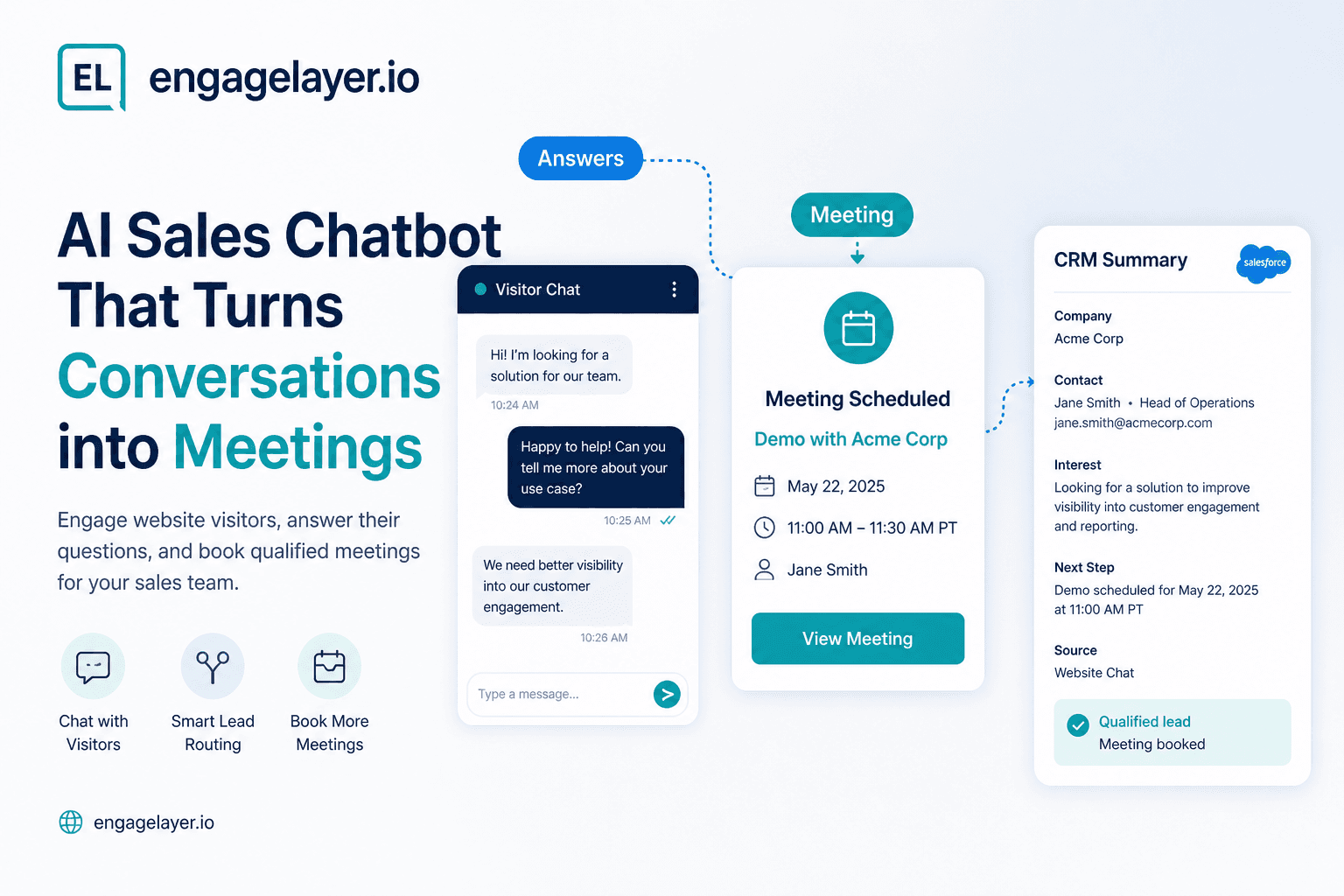
An AI sales chatbot is not a support bot with a meeting link. It should answer from trusted knowledge, qualify the visitor, and hand off to sales or a CRM with context. That is the shape of the assistant engagelayer.io is built for.
What an AI sales chatbot should do
IBM defines a chatbot as software that communicates with people through text or voice. In a sales setting, that means the assistant should do more than chat. It should answer common questions, keep the conversation moving, collect buying context, and pass the result to the next owner without losing the thread.
Salesloft?s Drift page is useful here because it shows how the market talks about the category. The page says AI chat agents capture buyer signal, engage visitors, answer questions, and feed seller workflows. That is a clear sales use case, and it also sets a high bar for what a real sales assistant must deliver.
Sales-assist vs support bot
A sales-assist chatbot and a support bot both use conversation, but they are judged by different outcomes. Support wants the issue resolved. Sales wants the buyer moved toward a meeting or another qualified step. If a team treats those as the same, it ends up with a bot that is good at one job and awkward at the other.
| Dimension | Support bot | AI sales chatbot |
|---|---|---|
| Primary goal | Resolve cases and deflect tickets | Answer questions and move the buyer toward a next step |
| Audience | Existing customers | Prospects and website visitors |
| Signal that matters | Issue type and service history | Need, fit, and buying intent |
| Good output | Closed support loop | Meeting request or routed lead |
| Bad fit | Long pre-sale buying cycle | A visitor who needs sales help now |
The path from answer to meeting
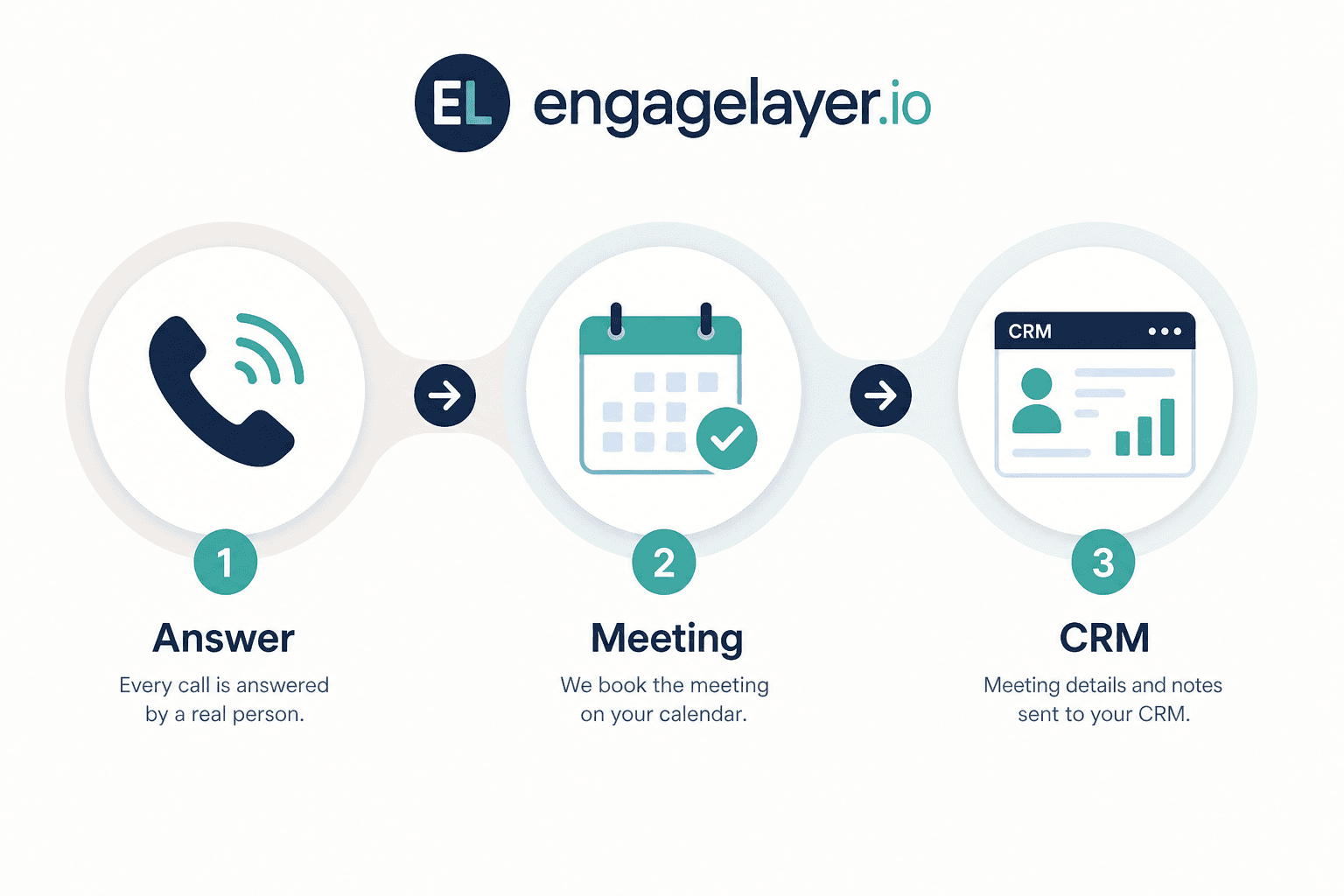
The clean path is simple. First the assistant answers from approved knowledge. Then it listens for buying signal, such as role, company size, timing, or use case. After that it can ask for contact details or point the visitor to a meeting path if the fit is strong. The order matters because buyers trust help more than pressure.
That is why the article on <link> /en/use-cases/lead-qualification </link> matters. Lead qualification is not a sidebar task. It is the step that turns a polite answer into a lead the sales team can actually work. Without it, the bot may still be useful, but it will not be sales-ready.
That is why the article on lead qualification use case matters. Lead qualification is not a sidebar task. It is the step that turns a polite answer into a lead the sales team can actually work. Without it, the bot may still be useful, but it will not be sales-ready.
Why knowledge grounding matters
A sales assistant only works when it stays inside approved knowledge. If it guesses on pricing, policy, integrations, or implementation details, trust drops fast. Buyers notice when an assistant is making things up, especially on pages where the visitor is already close to a decision.
Knowledge grounding also keeps the conversation useful for sales. The assistant can answer with the same facts the team already uses on the site, then hand off a lead that reflects the actual question, not a blur of generic chat. That is how the assistant stays helpful without turning into a guessing machine.
What a good handoff looks like
A good handoff includes the question asked, the main use case, the lead temperature, and the route forward. Hot, Warm, and Cool are easy for the team to read. Pipedrive, email, or a webhook is enough to move the lead without making the workflow heavier than it needs to be.
That is also why product pages and pricing pages matter. The assistant should feel like part of the buying path, not a random widget. If the next step is clear, the buyer can move forward without retyping everything or repeating the context to a rep.
Where engagelayer.io fits
engagelayer.io is built for this answer to meeting shape. It uses approved knowledge, marks the lead as Hot, Warm, or Cool, and can hand off to Pipedrive, email, or a webhook. It also supports EU-hosted processing and multilingual replies, which helps on sites that sell across borders.
It is not a support suite and it does not claim to be one. If you want the commercial fit page, use the <link> /en/pricing </link> page as the next step. That page gives a practical view of the product without mixing it up with broader support software.
It is not a support suite and it does not claim to be one. If you want the commercial fit page, use the pricing page as the next step. That page gives a practical view of the product without mixing it up with broader support software.
When to choose a support bot instead
Choose a support bot when the main problem is service. If the company needs ticket resolution, customer history, or a helpdesk that lives across the service journey, the support-first stack is the better fit. That is not a failure. It is a match between tool and job.
Choose a sales chatbot when the site needs to answer pre-sale questions, read buyer intent, and route only the stronger leads to the next step. The same word, chatbot, can hide a very different operating model. Buyers should compare the work the bot does, not just the label on the page.
Sources and methodology
IBM?s chatbot guide gives the basic definition and the split between rules-based and AI chatbots: IBM chatbot guide. That is the cleanest starting point for this topic.
Salesloft describes Drift-style AI chat agents as tools that capture buyer signal, engage visitors, answer questions, and feed seller workflows: Salesloft Drift page. I use that as vendor positioning for the sales-assist category.
engagelayer.io product facts used in this guide are the approved ones only: knowledge-grounded answers, Hot/Warm/Cool labels, Pipedrive, email, webhook handoff, EU-hosted processing, and multilingual replies. No invented ROI or native CRM claims are added.